
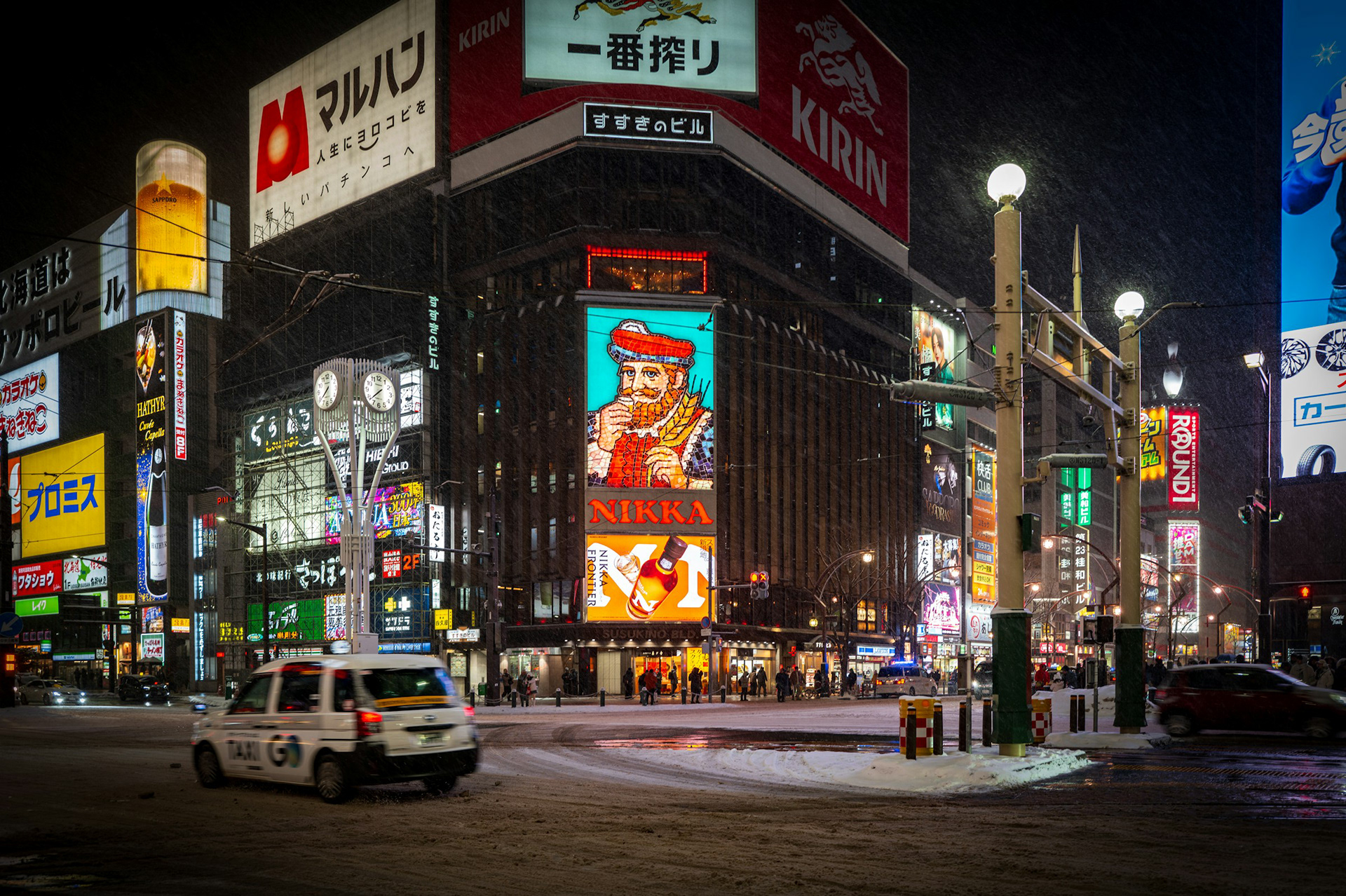
Sapporo presents a noticeably different side of Japan. Instead of ancient temple districts and tightly packed historical lanes, the city offers broad boulevards, Western-influenced architecture, snowy winters, illuminated entertainment districts, expansive parks, and mountain scenery within easy reach of downtown.
Many of our clients visit Sapporo for conferences, exhibitions, corporate events, and international gatherings. When they have free time between scheduled activities, they often ask which places are genuinely worth seeing and photographing. Drawing on years of experience living and photographing throughout Japan, this guide narrows Sapporo down to ten locations offering a rewarding mix of landmarks, modern cityscapes, historic architecture, markets, public art, and natural scenery.
Each location carries one of three straightforward ratings so you can plan at a glance:
Must-Shoot – iconic or uniquely photogenic; make time for it.
Nice-to-Shoot – worthwhile when you are nearby or have some flexibility in your schedule.
Skip-It – interesting to visit, but not worth prioritizing when your time is limited.
Camera ready? Let’s explore some of Sapporo’s most photogenic places.
LOCATION 1 – ODORI PARK
Why go
Odori Park extends for approximately 1.5 kilometres through central Sapporo, dividing the downtown area into northern and southern sections. Its twelve blocks include lawns, fountains, flower beds, sculptures, trees, and clear views toward Sapporo TV Tower. The scenery changes considerably throughout the year as the park hosts the Sapporo Snow Festival, spring flowers, summer events, beer gardens, autumn celebrations, and winter illuminations.
Pro tips
• Timing: visit early in the morning for quieter walkways and softer light, particularly outside major festival periods.
• Explore the full park: many visitors remain close to the TV Tower, but the western blocks offer more greenery, sculptures, and generally quieter compositions.
Best for
A recognizable introduction to central Sapporo, seasonal events, open city views, and varied urban-park photography.
Rating: Must-Shoot
LOCATION 2 – SAPPORO TV TOWER
Why go
Located at the eastern end of Odori Park, Sapporo TV Tower is one of the city’s defining landmarks. Its observation deck, approximately 90 metres above the ground, provides panoramic views along the full length of the park and across central Sapporo. The perspective is particularly effective during seasonal festivals, sunset, and winter illumination periods.
Pro tips
• Timing: arrive before sunset if you want to photograph the city in daylight, during blue hour, and after the surrounding lights appear.
• Window reflections: position the front of your lens close to the glass and shield it from interior lighting when practical. Avoid obstructing other visitors around the windows.
Best for
Elevated views of Odori Park, central Sapporo’s street layout, seasonal events, and nighttime cityscapes.
Rating: Must-Shoot
LOCATION 3 – SUSUKINO
Why go
Susukino is Sapporo’s principal entertainment district, filled with illuminated signs, restaurant entrances, narrow streets, traffic, and late-night activity. Rain and fresh snow introduce reflections and texture, while the contrast between warm storefront lighting and Sapporo’s winter conditions creates especially atmospheric scenes.
Pro tips
• Conditions: light rain or fresh snow can produce excellent reflections, although slippery streets and cold temperatures require appropriate footwear and equipment protection.
• Explore carefully: move beyond the largest intersection for smaller streets and layered compositions, but respect private businesses and avoid intrusive photographs of identifiable individuals.
Best for
Neon cityscapes, energetic street scenes, winter atmosphere, and nighttime urban photography.
Rating: Must-Shoot
LOCATION 4 – FORMER HOKKAIDO GOVERNMENT OFFICE (RED BRICK BUILDING)
Why go
Commonly known as the Red Brick Office, the Former Hokkaido Government Office Building was completed in 1888 and is one of Sapporo’s best-known historic landmarks. Its American Neo-Baroque design reflects Hokkaido’s distinctive development history and contrasts strongly with the surrounding modern business district. Following extensive restoration, the building reopened to the public in 2025 with renewed historical exhibitions.
Pro tips
• Timing: arrive early for a clearer view of the entrance, gardens, and symmetrical brick façade.
• Seasonal scenery: autumn foliage complements the red brick exterior, while fresh snow creates a cleaner and more distinctly Hokkaido composition.
Best for
Historic architecture, symmetrical compositions, seasonal color, and a visual introduction to Hokkaido’s modern development.
Rating: Nice-to-Shoot
LOCATION 5 – MOERENUMA PARK
Why go
Designed according to the vision of internationally renowned sculptor Isamu Noguchi, Moerenuma Park treats the entire landscape as one enormous work of art. Its approximately 190 hectares include geometric landforms, open lawns, public sculptures, fountains, the Glass Pyramid, and the artificial Mount Moere. Located approximately 12 kilometres from downtown, it requires more time than Sapporo’s central attractions but offers exceptionally distinctive scenery.
Pro tips
• Allow enough time: reserve at least half a day and check current transportation, facility hours, and seasonal access before traveling. Some services operate only during particular months.
• Mount Moere: the short climb provides a broad view over the park and toward Sapporo. Visit later in the day for warmer light, while confirming park and transportation schedules in advance.
Best for
Modern landscape design, public art, architectural minimalism, and expansive compositions without dense city-center backgrounds.
Rating: Must-Shoot
LOCATION 6 – HOKKAIDO UNIVERSITY
Why go
Hokkaido University developed from the Sapporo Agricultural College, established in 1876. Its central campus combines historic academic buildings, broad lawns, elm trees, museums, and long tree-lined avenues. The ginkgo avenue near the Kita 13-jo Gate becomes one of Sapporo’s most striking autumn scenes when its leaves turn gold, generally around late October.
Pro tips
• Autumn visit: the ginkgo avenue attracts substantial visitor traffic at peak color, so arrive early and check for university events or access changes.
• Respect the campus: remember that this is an active university. Remain in areas open to visitors, avoid interrupting classes or campus operations, and follow all posted photography restrictions.
Best for
Historic academic architecture, relaxed green spaces, autumn foliage, and quieter urban scenery near central Sapporo.
Rating: Nice-to-Shoot
LOCATION 7 – SHIROI KOIBITO PARK
Why go
Built around the production and history of Hokkaido’s famous Shiroi Koibito confectionery, this themed attraction combines European-inspired buildings, decorative interiors, gardens, factory exhibits, shops, and seasonal displays. The elaborate architecture and colorful scenery create a playful contrast with Sapporo’s more restrained urban landmarks.
Pro tips
• Seasonal highlights: the rose garden is especially attractive during its flowering period, while winter brings decorative illumination and snow-covered architecture.
• Plan ahead: check current admission options, operating hours, illumination dates, and reservation requirements for factory tours or confectionery-making experiences.
Best for
Colorful architecture, decorative details, gardens, family travel photography, and seasonal illumination.
Rating: Nice-to-Shoot
LOCATION 8 – MOUNT MOIWA
Why go
Rising approximately 531 metres above sea level, Mount Moiwa provides one of the best panoramic views across Sapporo, the Ishikari Plain, and the surrounding landscape. Visitors can reach the summit using the ropeway and mini cable car, subject to weather and operating conditions. The city becomes particularly striking after dark, and winter snow can intensify the reflected light.
Pro tips
• Timing: arrive before sunset to experience the transition from daylight through blue hour and into the fully illuminated night view.
• Check operations: ropeway service may be affected by maintenance, wind, or severe weather. The observation areas can become crowded, so use tripods or other camera supports only when permitted and without obstructing visitors.
Best for
The classic panoramic view of Sapporo, sunset transitions, illuminated cityscapes, and expansive winter scenery.
Rating: Must-Shoot
LOCATION 9 – NIJO MARKET
Why go
Nijo Market has served Sapporo since the early Meiji period and remains one of the city’s most accessible places to experience Hokkaido’s seafood culture. Fish displays, restaurant entrances, handwritten signs, narrow passages, and conversations between vendors and customers provide a more intimate photographic environment than Sapporo’s major landmarks.
Pro tips
• Timing: visit during the morning, when more shops and seafood businesses are active. Individual opening hours vary, so check before making a special trip.
• Ask permission: obtain consent before photographing vendors, staff, or individual shops at close range, and avoid blocking customers or working areas.
Best for
Seafood culture, market details, culinary photography, and everyday activity in central Sapporo.
Rating: Nice-to-Shoot
LOCATION 10 – HISTORIC VILLAGE OF HOKKAIDO
Why go
The Historical Village of Hokkaido is a large open-air museum containing preserved and reconstructed buildings from the Meiji, Taisho, and early Showa periods. Its four areas recreate urban, fishing, farming, and mountain communities, allowing visitors to photograph historic architecture with relatively few modern visual distractions.
Pro tips
• Winter visit: accumulated snow dramatically changes the village and helps conceal modern surfaces, creating one of its most atmospheric settings. Wear appropriate footwear and prepare for low temperatures.
• Allow enough time: the museum covers approximately 54 hectares, so reserve several hours and check seasonal opening hours, closed days, and transportation before visiting.
Best for
Historic Hokkaido architecture, open-air museum photography, winter scenery, and an immersive view of the region’s development.
Rating: Must-Shoot